
Get In Touch
- Email contact@anishkaparmar.com
- Address 544-Krupal City Centre, Ashram Road, Ahmedabad (Gujarat) India.
- Follow us

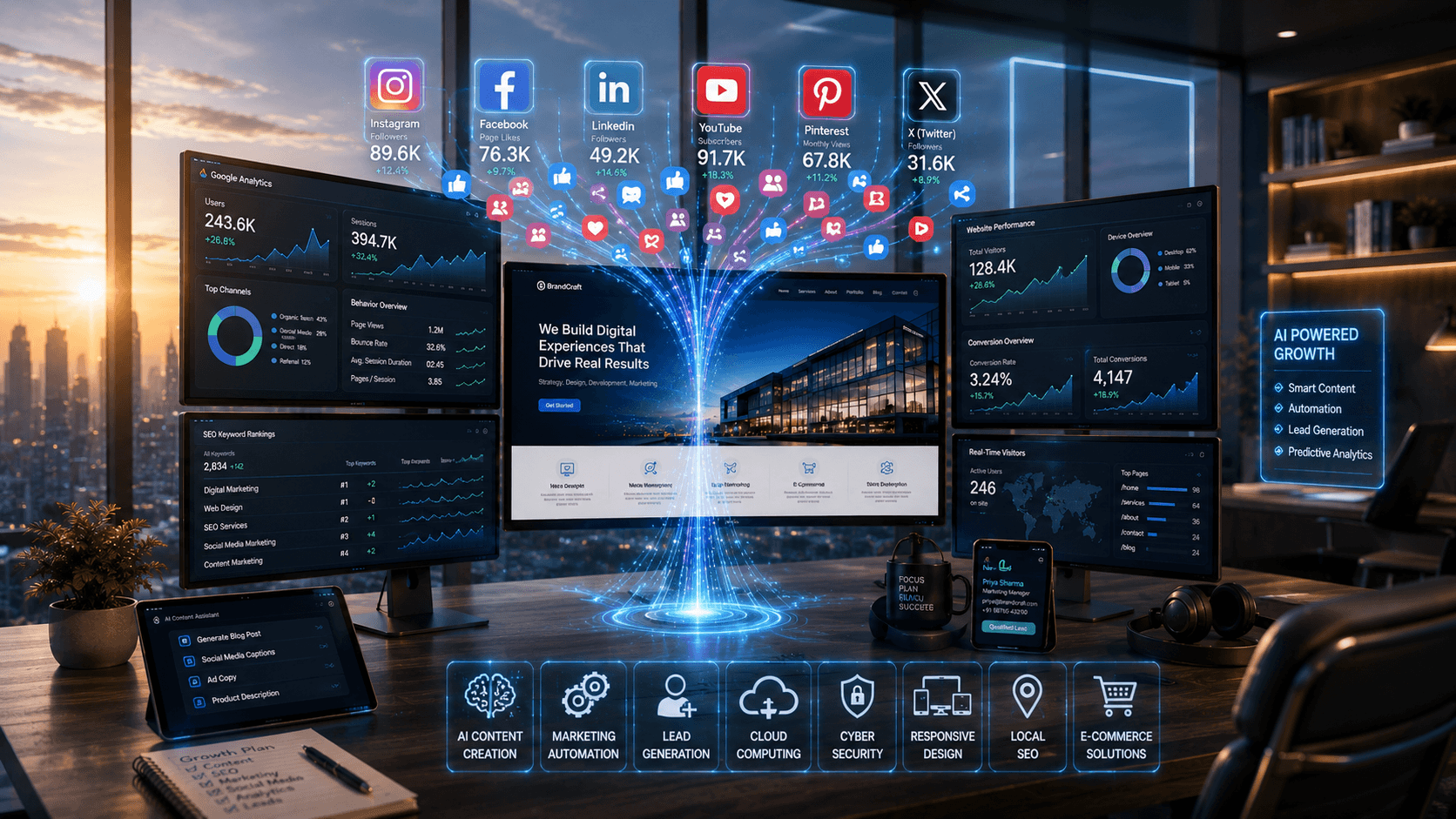
How Social Media Marketing Drives Website Traffic: 10 Proven Strategies
In the digital age, your website is your storefront, but your social media channels are the bustling highways that lead customers to your door. Without a strategic social media presence, even the most beautifully designed website remains a hidden gem. But how exactly does Social Media Marketing drives website traffic? It’s not just about posting pretty pictures; it’s about strategic storytelling, algorithm intelligence, and data-driven conversion funnels.
With billions of active users on platforms like Facebook, Instagram, LinkedIn, X, YouTube, and Pinterest, social media gives businesses an incredible opportunity to reach potential customers, build relationships, and drive targeted traffic to their websites.
Whether you own a startup, an e-commerce store, a local business, or a large enterprise, an effective social media strategy can transform your website into a lead-generating machine. By sharing valuable content, engaging with your audience, running targeted campaigns, and integrating AI-driven marketing strategies, you can consistently attract visitors who are genuinely interested in your products or services.
Let’s explore the 10 most effective ways social media marketing drives website traffic and helps businesses grow in 2026.
1. Increases Brand Awareness
Social media introduces your business to thousands of potential customers every day and that’s how social media marketing drives website traffic.
Every post, reel, story, video, or carousel increases your brand’s visibility.
As people repeatedly see your content, they become familiar with your business.
Consistent branding builds recognition and trust over time.
People are more likely to visit a website from a brand they already recognize.
Engaging visuals and valuable content encourage shares and recommendations.
Brand awareness also increases direct website searches on Google.
A recognizable brand earns higher engagement and more clicks.
The more people know your business, the more traffic your website receives.
Strong branding is the first step toward long-term online growth.
2. Drives Targeted Website Visitors
Not all traffic is valuable—targeted traffic is what matters.
Social media allows you to reach audiences based on interests, demographics, location, and behavior.
Platforms like Facebook and LinkedIn provide advanced audience targeting.
Sharing content relevant to your niche attracts visitors who are already interested.
These users are more likely to explore your website and convert into customers.
Relevant traffic improves engagement and reduces bounce rates.
Targeted campaigns maximize your marketing budget.
The right audience generates better leads and higher ROI.
Quality traffic consistently outperforms random visitors.
A strategic social media plan ensures your website attracts potential buyers.
3. Builds Trust Through Valuable Content
People buy from businesses they trust.
Educational posts, tutorials, industry tips, and success stories establish your expertise.
Regular posting demonstrates consistency and professionalism.
Sharing customer testimonials and case studies builds credibility.
AI content solves problems before customers even contact you.
Trust encourages visitors to explore your website further.
Authentic communication creates stronger customer relationships.
Transparent businesses gain loyal followers.
A trusted brand enjoys higher conversion rates.
Content marketing turns followers into website visitors and customers.
4. Improves SEO Indirectly
Although social signals are not direct Google ranking factors, they support SEO.
Social media content attracts backlinks from blogs and websites.
More people discover and share your content.
Increased brand searches indicate growing popularity.
Quality content drives longer website sessions.
Higher traffic improves user engagement metrics.
Fresh content keeps your audience returning.
SEO and social media work together for long-term growth.
A strong online presence increases your authority.
Consistent social activity supports overall search visibility.
5. Promotes Blog Content
Publishing a blog is only the beginning.
Social media distributes your blog to a much larger audience.
Every platform offers a new opportunity for discovery.
Create short videos, reels, and carousels summarizing blog articles.
Include compelling calls-to-action that encourage readers to visit your website.
Repurpose one blog into multiple social posts.
Educational content receives more shares and saves.
Increased blog traffic strengthens your website authority.
Fresh website visitors improve overall SEO performance.
Social media amplifies every piece of content you create.
6. Generates High-Quality Leads
Social media attracts users at different stages of the buying journey.
Lead magnets such as free guides, webinars, or consultations encourage website visits.
Landing pages capture visitor information.
Contact forms convert visitors into leads.
WhatsApp integration simplifies communication.
AI chatbots answer customer questions instantly.
Retargeting campaigns reconnect interested users.
Automated follow-ups nurture potential customers.
Qualified leads increase sales opportunities.
Your website becomes the center of your lead generation system.
7. Increases Website Engagement
Visitors arriving from social media often spend more time exploring related content.
Internal links encourage users to browse multiple pages.
Videos, interactive graphics, and infographics improve engagement.
Engaged visitors reduce bounce rates.
Time spent on your website increases trust.
Engagement signals indicate valuable content.
Well-structured pages encourage deeper exploration.
Satisfied users are more likely to return.
Repeat visitors strengthen your online presence.
Engagement ultimately improves conversions.
8. Supports Paid Advertising Campaigns
Organic growth is powerful, but paid advertising accelerates results.
Facebook, Instagram, LinkedIn, and YouTube ads drive targeted visitors.
Landing pages increase campaign effectiveness.
Clear calls-to-action improve conversion rates.
Remarketing campaigns reconnect previous visitors.
Website analytics optimize advertising performance.
Paid campaigns deliver measurable ROI.
High-quality landing pages reduce acquisition costs.
Professional websites convert paid traffic more effectively.
Social media advertising and websites work best together.
9. Encourages Social Sharing
Great content naturally gets shared.
Each share exposes your website to new audiences and that’s how social media marketing drives website traffic.
User-generated content builds authenticity.
Contests and giveaways encourage participation.
Interactive posts generate conversations.
Shares increase referral traffic.
More referrals improve brand visibility.
Valuable content reaches audiences beyond your followers.
Organic sharing creates sustainable growth and that’s how social media marketing drives website traffic.
Every share becomes a potential website visit.
10. Strengthens Long-Term Business Growth
Social media marketing is not about overnight success.
Consistency creates lasting relationships and that’s how social media marketing drives website traffic.
Website traffic grows month after month.
Content becomes a long-term business asset.
SEO continues improving with valuable content.
Customer trust increases over time.
Brand authority becomes stronger.
Marketing costs decrease as organic traffic grows and that’s how social media marketing drives website traffic..
Your website evolves into your primary sales platform.
Combining social media, SEO, AI content, and a professional website creates sustainable business growth.
Conclusion: How Social Media Marketing Drives Website Traffic
Social media marketing and your website should never operate separately—they are strongest when they work together. Social platforms help you attract attention, build relationships, and engage potential customers, while your website converts that interest into inquiries, leads, and sales.
By consistently creating valuable content, optimizing your website, leveraging SEO, and using AI-powered marketing strategies, your business can generate a steady flow of qualified traffic and achieve long-term growth.
In 2026, businesses that integrate social media with a high-performing website will be better positioned to build trust, increase visibility, and stay ahead of the competition.
Ready to Drive More Traffic to Your Website?
Grow your business with a results-focused digital strategy that combines Social Media Marketing, SEO, AI Content Creation, and a professionally designed website.